Engineering Leadership
for the AI Era
23 years building startups. From engineer #1 to CTO to COO. $130M exit. Now helping tech leaders navigate the most significant shift in how we build software.

Where I Stand on AI
"The future has never been as unevenly distributed as it is today."
I spend my evenings and weekends building with AI — shipping real projects with Claude Code, comparing models on production tasks, running parallel agents in the cloud. Not reading about it. Doing it.
That hands-on work shapes how I think about the transition engineering organizations are going through. Many leaders know AI matters but aren't sure where to start or what to trust.
I bridge that gap — 23 years of building teams and shipping products, combined with daily experience using AI as a real tool, not a talking point.
Agentic AI Is Here
I run autonomous agents on real migration tasks and compare the output. The delegation model is changing faster than most orgs realize.
Hand-Coding Is Dead
AI writes most of the code now. The hard part is figuring out how to build production software in this new world — and that's where the real work is.
The Gap Compounds
The tools change every week. Reading about AI isn't enough — you need to carve out real time to practice, or the distance grows fast.
Leadership Must Adapt
AI-augmented teams work differently. The playbook for managing them is being written by the people actually doing it.
Where I've Built
From IC to CTO to COO. Each role taught me something different about building teams, systems, and companies.
Led Platform and Cloud Engineering. Modernized infrastructure, improved security and compliance. Built the incident management process from scratch. Now leading a cross-functional Quality and Reliability effort across Engineering, Product, and Operations.
Started as a software engineer, grew to VP Engineering overseeing 35+ engineers. Expanded to COO running Operations, Finance, and People Ops. Then CTO leading a 45-person engineering department and 8-person People Ops team.
Joined as the first engineer. Built the technical foundation and grew into CTO. Scaled to acquisition with zero external funding.
Started in a telecom R&D lab, moved through health insurance tech, then joined a UK startup remotely—first exposure to high-caliber distributed teams.
How I Think
Frameworks I've developed through practice. Not theory—systems I actually use daily.
Systems Lag Teams
Your system is a lagging indicator of your team. Today's codebase reflects your team from years ago. To improve systems, invest in people, processes, and tools first—results follow with inevitable delay.
3 Modes of Work
Stabilizers, improvers, and foundations. Every engineering decision falls into one of three modes. Knowing which mode you're in—and which you should be in—is half the job of leading a team.
Your Circus, Your Monkeys
Align decision authority with accountability. Don't consensus your way to a Frankenstein solution. The goal of decisions is accuracy, not agreement.
Fast vs. Rushing
Speed comes from years of building competence, not from pushing harder right now. If you're slow, the question isn't "how do I rush?" but "what competence am I missing?"
Leader, Manager, Expert
Three distinct roles in a startup—strategy, team building, and execution. Each demands different evaluation criteria. The job changes dramatically at every stage of scale.
High-Standards Satisficer
Build an excellent pipeline, set a competence-driven bar, then commit to the first option that clears it. Combines the rigor of a maximizer with the decisiveness of a satisficer.
What I'm Building
Current experiments, learning, and projects. Updated as I ship.
Featured
Highlighted posts, talks, and projects.
Navigating AI in 2026
The future has never been as unevenly distributed as it is today.
3 AI Competencies
AI Researcher, AI Engineer, AI Operator — the new role taxonomy for the AI era.
Problem Categories
Five types of hard — a framework for calibrating your emotional response.
On Mentorship
All areas of our life are interconnected, like a distributed system.
Artificial General Intelligence
What AGI actually means, why it matters, and how to think about the timeline.
Virtú and Fortuna
Machiavelli's framework for navigating what you can and can't control.
What I'm Reading
Books shaping how I think right now.
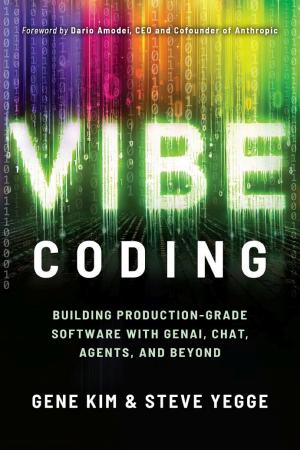
Vibe Coding
Handpicked Tweets
What People Say
From First Round's Fast Track mentorship program.
Dui has had a profound impact on my life. The opportunity to connect with him has far exceeded any expectation I may have had. He's walked the path to technical leadership—depth of experience in how to advise and think through navigating my journey from IC to engineering management. He helped me find clarity on what I actually wanted, then set milestones to achieve it.
Dui is a paragon of knowledge and wisdom with an incredibly diverse range of expertise. His holistic approach to mentorship, encompassing professional understanding and personal well-being, has been a game changer for me. In essence, Dui is more than a mentor; he's a catalyst for transformation.
Work With Me
I take on a small number of advisory clients alongside my full-time role.
Who I Work With
- CTOs and VPs navigating the AI transition
- Engineering leaders scaling their first real org
- Technical ICs making the jump to leadership
- CEOs who need a technical thought partner
How It Works
I've been through these transitions myself — IC to CTO, CTO to COO, startup to exit. That's the value. Not frameworks from a textbook, but pattern-matching from lived experience.
The format fits your situation. What matters is having someone who's been there to think things through with.
Get in TouchGet in Touch
Let's talk
Whether you're navigating an AI transition, scaling your engineering org, or figuring out your next move as a technical leader—I'm happy to chat.